
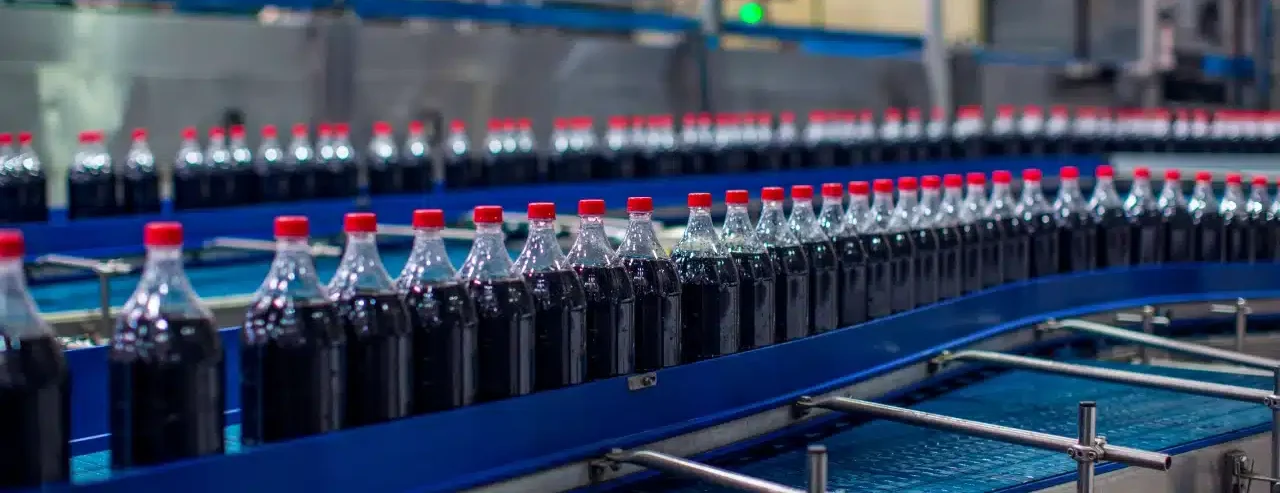
For food and beverage manufacturers and distributors, unsellable products are an unavoidable reality. Off-spec production runs, label errors, temperature excursions, transportation damage, and expiration timelines all generate packaged waste that can’t go to market. The question isn’t whether this waste will occur — it’s how you manage it.
Historically, the answer was landfill or incineration. Today, there’s a better one — and Circular Services has built the infrastructure to deliver it.
De-Packaging: A Smarter Alternative to Disposal
De-packaging is a process that separates packaged food and beverage products into their component parts — food and liquid contents on one side, packaging materials on the other — so both can be responsibly recovered rather than disposed of.
The scale of the problem makes this approach critical. The U.S. discards nearly 60 million tons of food each year — close to 40% of the entire domestic food supply — and packaged commercial product is a significant part of that total. When it goes to landfill, organic material decomposes and releases methane, a potent greenhouse gas. Industry data consistently shows that organic materials constitute 30–50% of landfill content by weight, making food and beverage waste one of the largest and most addressable contributors to landfill-generated emissions.
De-packaging interrupts that cycle at the source. The organic material is processed through industrial composting or anaerobic digestion, producing renewable energy and nutrient-rich compost. The packaging — such as PET, metals, paper, and cardboard — is sorted and directed to recycling streams. The result is maximum material recovery from what would otherwise be a total loss.
For large-volume generators, this approach is also more cost-effective than landfill or incineration. Tip fees for disposal in many U.S. markets run up to 50% higher than dedicated organics recovery solutions. And as nine states have already enacted food waste diversion mandates — with more expected to follow — the compliance case is growing alongside the economic one.
Security and Brand Protection, Built In
For food and beverage brands, the handling of unsellable product is not only a logistics question, but also a brand integrity one. Responsible de-packaging facilities provide full chain-of-custody documentation, no-photography environments, controlled access, 24/7 surveillance, and Certificates of Destruction to confirm secure product handling from receipt through final processing.
De-Packaging with Circular Services
Circular Services is the largest privately held recycling and composting company in the U.S., operating more than 35 recycling and organics processing facilities nationwide and handling over 1.5 million tons of residential, commercial, and industrial material annually. Our de-packaging capabilities are among the most advanced and geographically expansive in the country.
Northeast: Our Southington, CT campus — home to the largest de-packaging facility in the Northeast — is also the site of the longest continuously operating anaerobic digestor in North America, with permitted food waste processing capacity of 100,000 tons per year. Food and beverage contents recovered through de-packaging are processed on-site and converted into renewable electricity and high-quality compost, mulch, and soil products.
Southeast: Circular Services opened Florida’s first and only commercial-scale de-packaging facility permitted by the Florida Department of Environmental Protection (FDEP), located in Vero Beach. The facility is capable of processing more than 600 tons of food and beverage material per week, separating packaging for recycling and diverting organic contents to Circular Services’ co-located composting site. As Florida’s largest composter — with organics recovery facilities in Greater Tampa, Sarasota, Lee County, Vero Beach, and Palm Beach County — Circular Services provides end-to-end recovery for Florida’s food and beverage generators, who previously had no compliant, cost-effective alternative to costly landfill disposal.
Together, these facilities reflect what the circular economy looks like in practice: clean separation of materials, responsible processing of both streams, and measurable alternative to costly disposal via landfill or incinerators.
We partner with food and beverage manufacturers, distributors, and retailers to ensure unsellable products are handled securely, compliantly, and with maximum material recovery.
Contact us to learn how de-packaging can reduce your disposal costs and support your sustainability goals.