

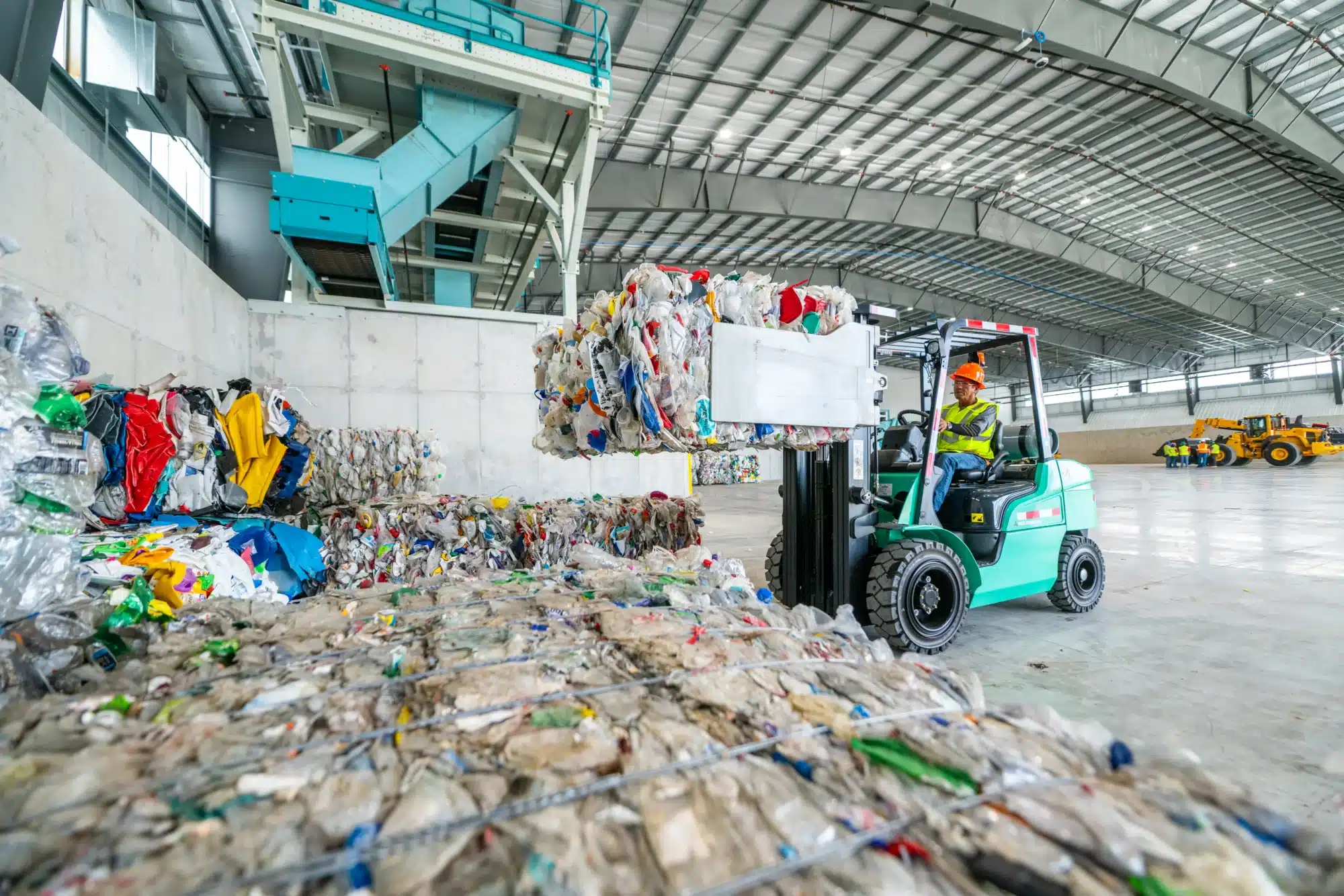
Commodity sourcing strategies are rapidly evolving as manufacturers face increasing pressures from market volatility, geopolitical uncertainty, and impending sustainability mandates. What was once considered waste is now emerging as a strategic solution for supply security – recycled commodities recovered from homes and businesses and returned to supply chains as new inputs.
Recycled metals, fibers, and plastics are no longer secondary to virgin materials. When recovered, qualified, and sold through structured commodity channels, they function as reliable inputs that support resilience, cost efficiency, and long-term supply security.
From Waste Streams to Strategic Supply
Modern resource recovery operations are optimized for material value. Recovered commodities are sorted into grades according to industry specifications, priced based on market dynamics, and sold into manufacturing supply chains that demand consistency and scale. Today, recycled commodities compete directly with virgin inputs, particularly in sectors where domestic sourcing, energy efficiency, and supply continuity matter most.
The Impact of Leveraging Recycled Commodities
Supply chain resilience: Recycled commodity supply chains are local by design, reducing exposure to global disruptions, trade restrictions, and long lead times.
Resource efficiency: Recycling and reuse of commodities is less energy and resource intensive than virgin production. Per the Association of Plastics Recyclers, replacing virgin resin with recycled content can save up to 70% of the energy typically required for production.
Alignment with procurement and ESG goals: Recycled commodities enable companies to meet recycled content requirements and emissions targets without compromising quality or reliability.
Economic impact: the EPA’s 2020 Recycling Economic Information Report estimates recycling and reuse activities in the U.S. accounted for 757,000 jobs, $36.6 billion in wages and $6.7 billion in tax revenue.
How Recycled Commodities Create Value
Structured commodity procurement bring discipline to material markets that were once fragmented. Clear quality standards, transparent pricing, and defined contracts give buyers confidence and allow sellers to capture fair market value.
For manufacturers, this means access to recycled inputs that are consistent, traceable, and scalable. For material recovery companies, it means elevating recovered materials from operational byproducts and waste streams to strategic assets.
Recycled Commodities as Competitive Inputs
Across sectors, recycled commodities are proving indispensable:
- Metals such as aluminum and steel are in high demand for manufacturers as endlessly recyclable with retained material properties.
- With increasingly advanced sorting and processing technologies, recovered plastics and polymers can be utilized in higher value applications, unlocking the $50-75 billion economic opportunity for plastics recycling.
Looking Ahead
As supply chains are forced to adapt to evolving and uncertain global landscape, recycled commodities will play an increasingly important role in sourcing strategies. The companies that treat recovered materials as true commodities will be best positioned for resilience, efficiency, and long-term value.
Recycled commodities are no longer a supplement or substitute. They are a competitive advantage.